Newark, Essex County
Water treatment in Newark, NJ
Newark runs its own water utility, fed by a 35,000-acre watershed the city owns in the hills of North Jersey. The city finished replacing its lead service lines in 2022, so today the questions are mostly about chlorine, disinfection byproducts, and the plumbing inside older homes.
- Free installation
Water quality
What's in Newark's water
From Newark Department of Water & Sewer Utilities's latest annual water quality report. Your own test shows what reaches your tap.
Newark Department of Water & Sewer Utilities
2025 test results · public water system NJ0714001
- Where it comes from
- Mostly the Pequannock Watershed, 35,000 acres the city owns in North Jersey, treated at the Pequannock Water Treatment Plant. Some water comes from the Wanaque Reservoir through the North Jersey District Water Supply Commission.
- Disinfectant
- Chlorine. The highest annual average in the system was 2.67 ppm, with single readings from 0.36 to 3.85 ppm (the limit is 4).
- Hardness
- Not listed in the report. We measure it at your tap during the water test.
- PFAS
- PFOA averaged as high as 4.15 ppt and PFOS 2.18 ppt, measured where Wanaque water enters the city. Both are under New Jersey's limits; the PFOA figure is just above the federal 4.0 ppt limit that takes effect in 2029.
- Lead
- Lead at the 90th percentile was 0 ppb, and no tested home was over the action level.
What it means in Newark
Strong chlorine
Newark's highest annual chlorine average was 2.67 ppm in 2025, with single readings up to 3.85 ppm. That's within the limit of 4. If your tap smells like a pool, chlorine is what you're noticing.
Disinfection byproducts
Trihalomethanes form when chlorine meets organic matter. Newark's highest running average was 65 ppb, under the 80 ppb limit, though single samples reached 136 ppb.
Lead now comes from inside the house
With the city's lead service lines gone, the remaining risk is older fixtures and solder in your own plumbing. Newark adds zinc orthophosphate to coat pipes and asks residents to run the tap for 30 seconds before use.
Our systems
The systems Newark homes usually need

Whole-Home Carbon Filter
City-water homes bothered by chlorine but not hard water
Details about the Whole-Home Carbon Filter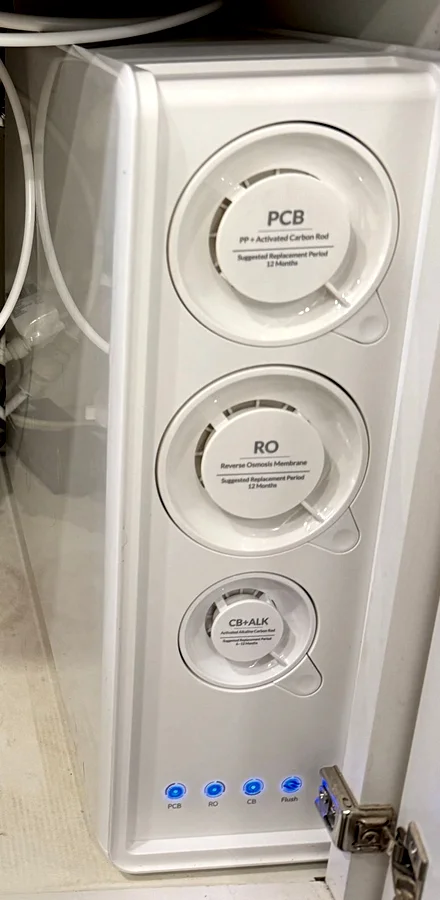
Tankless Alkaline RO
Replacing bottled water for drinking and cooking
Details about the Tankless Alkaline RO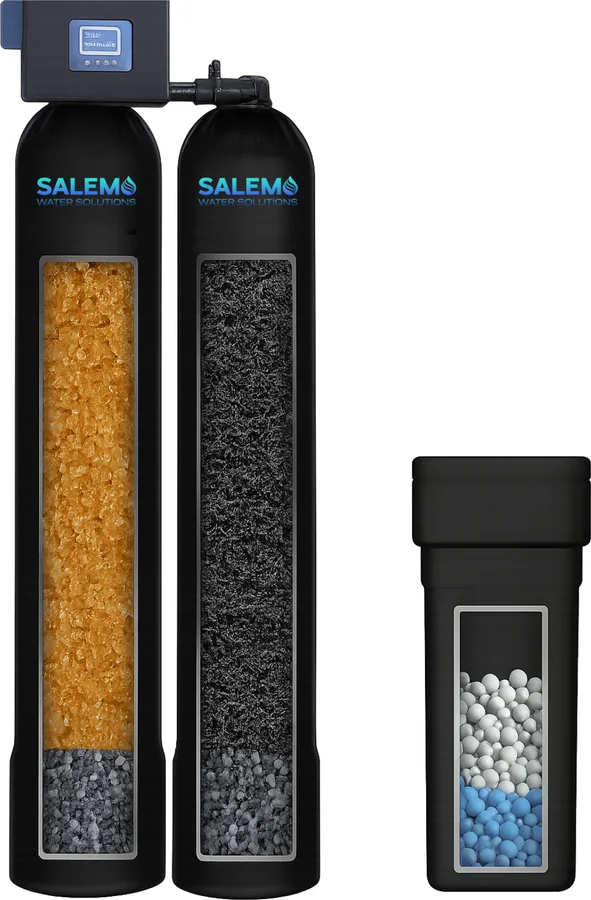
Complete Home System
City-water homes that want every tap and appliance protected at once
Details about the Complete Home System
- Free installation
FAQ
Newark water questions
Can't find what you're looking for? Call (856) 276-5310. A real person picks up.
Is Newark's water safe from lead now?
The city's 2025 testing found lead at the 90th percentile of 0 ppb, and no home was over the action level. Lead can still come from fixtures and solder inside an older home, which is why the city recommends flushing the tap and testing if you're unsure.
Why does Newark tap water taste like chlorine?
The city disinfects with chlorine and keeps enough in the pipes to stay effective all the way to your tap, with a highest annual average of 2.67 ppm in 2025. A carbon filter removes the taste and smell for the whole house.
Does Newark water have PFAS?
Low levels. PFOA averaged as high as 4.15 ppt where reservoir water from the Wanaque system enters the city. That meets New Jersey's limit and is just above the federal 4.0 ppt limit that takes effect in 2029.
Is Newark water hard?
The city's 2025 report doesn't list hardness, so we measure it at your tap during the free water test before recommending a softener.
Water quiz
Find the right system for your home
Answer five quick questions and we'll recommend a water treatment solution for your home. Then book your free water test and quote.
- Takes about a minute
- Instant recommendation
- Prefer to talk? Call (856) 276-5310